By: Daria G. Lindquist, 2026 graduate of MSU College of Law, Talsky Center Research Fellow, and 2002 intercountry adoptee
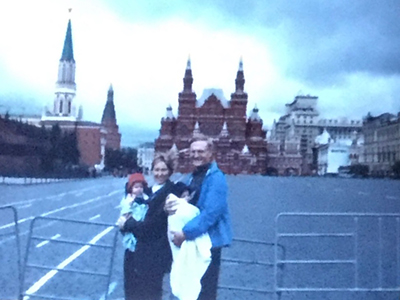
From an orphanage to law school is the story I’ve lived. My earliest days began at a stop along the Trans-Siberian Railroad, in a building full of dozens of children left behind. My birth mother relinquished her parental rights at the hospital, and my father wasn’t listed on the adoption paperwork, so many details painting my origin story were left unknown, as is especially common in intercountry adoptions. After coming halfway across the world and becoming U.S. citizens, my twin and I were ultimately raised on a farm in rural Michigan by our American parents.
Fast forward a couple decades, and we both have graduated from MSU with bachelor’s degrees, our stories paving the way for our respective careers. While in undergrad, we hired a private investigator abroad to find our birth family—and indeed, we did. While we always knew we came from the Asian/Siberian region of Russia, we would find that our mother is half Russian and half Tatar, and our father is Uzbek, only having traveled to Russia on a work visa and to visit our mother. We have half siblings on both sides and have since remained in contact over Russian social media. We are now planning our trip abroad this summer for our first in-person birth family reunion.
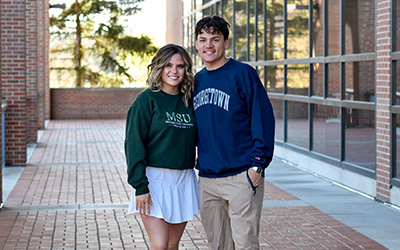
While my twin pursued a passion for studying cultures and languages, speaking five at various proficiencies, I chose law school at MSU. Inspired by my own lived experience, I always knew I wanted to study family law and become an attorney. When I came across an opportunity to work with The Lori E. Talsky Center for Human Rights of Women and Children, I knew it would be a great fit. The Talsky Center, under the leadership of Professor Michelle Oliel, focuses on education, engagement, and policy reform in international human rights law.
I am so grateful to have connected with Professor Oliel, later taking her international children’s rights class and immersing myself in global legal frameworks and treaties designed to protect fundamental human rights. One of the projects in international children’s rights culminated in an advocacy brief on ending the use of institutionalized care for children who identify as victims or survivors of, or who are otherwise affected by, human trafficking.
Together, Professor Oliel and I have coauthored and submitted two legal articles for publication by McGill-Queen’s University Press and Routledge, respectively, Family, and Children in humanitarian crises: lessons learned from intercountry adoption in armed conflict, natural disasters, and other emergencies.
My work with the Talsky Center, combined with Professor Oliel’s mentorship, has allowed me not only to contribute to academic scholarship before graduating with my Juris Doctor, but also to connect with lawyers and other professionals around the world working on family law and human rights issues.
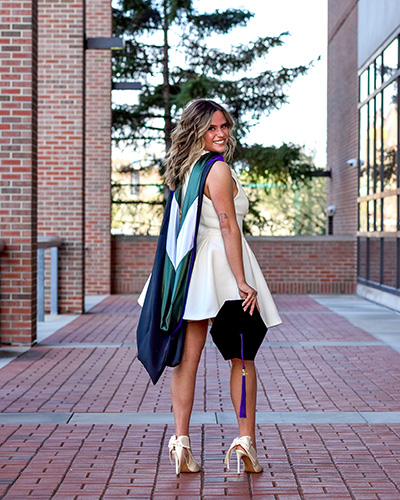
Law school brought out my voice and purpose. Getting published on topics that are both deeply personal and legally significant has been incredibly meaningful. It’s a full circle moment: advocating for others whose experiences mirror my own. By strengthening child protection systems in ways that protect children’s and families’ rights while honoring cultural contexts and local expertise, we can create more effective solutions. I thank Professor Oliel and everyone at the College of Law for their support in guiding students like me through contributing meaningfully to the field of law and some of society’s most pressing issues.